Dr. Žilvinas Svigaris Examines Family Dynamics in ‘Who Educates Parents? Challenges Traditional Parenting Advice with a Refreshingly Honest Family Perspective’

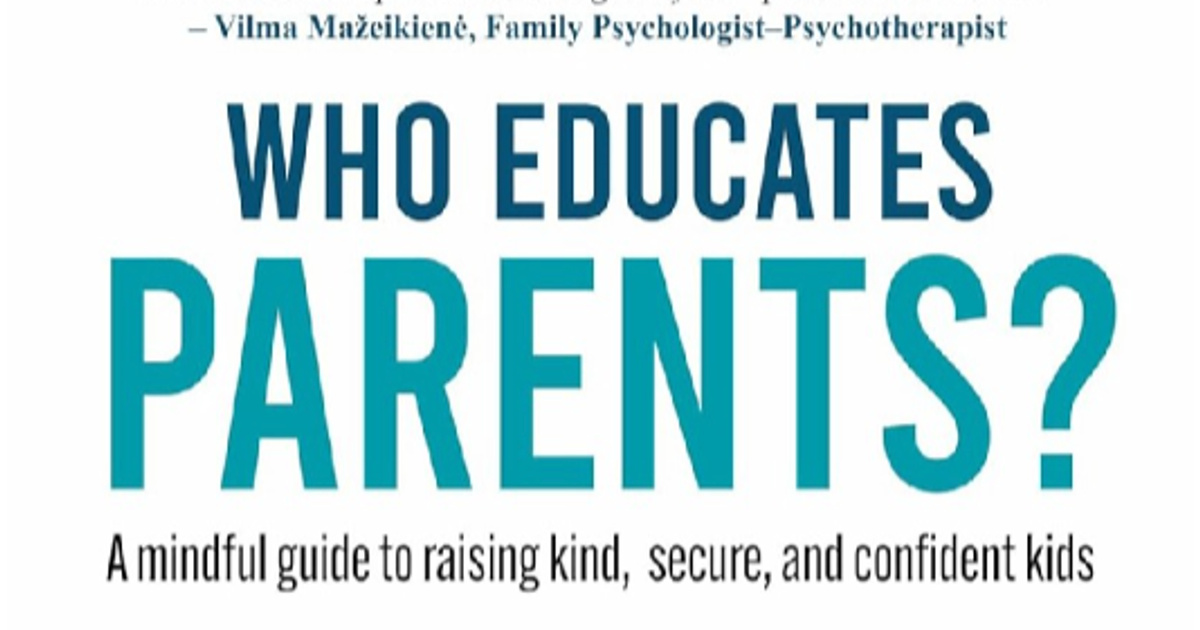

In an era saturated with parenting literature that frequently mandates rigid, expert-driven protocols, a vital new voice has entered the discourse. The recently published work, ‘Who Educates Parents? Challenges Traditional Parenting Advice with a Refreshingly Honest Family Perspective’, offers a paradigm shift for modern households. Authored by Dr. Žilvinas Svigaris in direct collaboration with his own children, the text challenges the conventional assumption that parenting is a unidirectional exercise of authority. Instead, the author poses a fundamental inquiry: ‘Who teaches parents how to become parents?’
The foundation of this release rests on more than two decades of real-world experience, moving beyond abstract theories to embrace the lived reality of family life. By integrating the perspectives of his children alongside his own, Dr. Žilvinas Svigaris creates a rare, multifaceted narrative. These contributions are particularly significant when the children recall shared historical family events differently than their parents, reinforcing the book’s commitment to authentic, open-ended dialogue rather than prescriptive formulas. This collaborative approach serves to deconstruct the traditional hierarchy, suggesting that children serve as educators to their parents just as parents guide their offspring.
Within the pages of ‘Who Educates Parents? Challenges Traditional Parenting Advice with a Refreshingly Honest Family Perspective’, readers will encounter a diverse exploration of essential topics. The text covers communication strategies, the nuances of adolescence, the realities of modern schooling, and the vital role of creativity and learning through music. By examining how shared experiences and mutual trust foster stronger bonds, the work argues for a foundation rooted in respect rather than top-down control. It is an essential resource for those seeking to prepare the next generation for an uncertain future through empathy and sustained reflection. As the author looks to the future, this book stands as a testament to the efficacy of family-wide discourse in building more resilient and communicative relationships.